Dear friends,
I am seldom using this site nowadays.
For general information, go to my website https://www.delbourg-delphis.org/
I now publish my posts on LinkedIn: https://www.linkedin.com/in/delbourgdelphis/
Thank you!

Dear friends,
I am seldom using this site nowadays.
For general information, go to my website https://www.delbourg-delphis.org/
I now publish my posts on LinkedIn: https://www.linkedin.com/in/delbourgdelphis/
Thank you!
→ No CommentsTags:
According to Gallup, as of June 2015, “the percentage of U.S. workers engaged in their jobs continued to hold steady at 31.9%,” which means that employee disengagement remains extremely high year after year. Do the math! Passive and active employee disengagement is costly business when you relate the stats to the 2015 total wages and salaries, which came out to about eight trillions of dollars.
The problem won’t be fixed overnight, and organizations may want to realize that disengagement comes in a multitude of forms, and for a multitude of reasons. In many cases, however, it is linked to the “boreout” phenomenon described by Peter Werder and Philippe Rothlin in their 2007 book Boreout!: Overcoming Workplace Demotivation: employees are disillusioned, do not see the purpose of what they do or sometimes do not even know what they have to do – hence their self-preservation strategy of looking “busy” to keep their job.
Start somewhere: Tactical Re-engagement with OKRs”
Before you try to revolutionize your processes at a global organizational level, start somewhere smaller after a careful analysis of the overall “health” of your company… Look at the new generation of products designed with the practical goal of engaging people in great achievement. One of them is Workboard, a well-funded company started in 2013 by Deidre Paknad.
Workboard enables companies to implement an OKR (Objectives and Key Results) methodology, the purpose of which is to provide real clarity and focus on aspirational goals and results. The concept is to bring teams together so they pull in the same direction and experience personal pride through collaborative accomplishments. As Deidre puts it: “OKRs combine ambitious, qualitative goals and quantitative success measures with weekly execution and accountability cadence. They galvanize people to achieve the best possible results in the shortest time period. These are not old-school back office goals – these are live, dynamic, and real for your team. Outstanding results come from shared aspirations and accountability. Rather than assume you have either one, ensure you have both.”
Transformation made easy
Implementing such organizational transformation doesn’t take months or fortunes. The Workboard platform makes it straightforward:
At all times, all the team members can see how fast they are advancing towards the goal, how well they are delivering on particular objectives along the way, and eventually the risks or blockages that call for specific attention.
At all times, all the team members can see how fast they are advancing towards the goal, how well they are delivering on particular objectives along the way, and eventually the risks or blockages that call for specific attention.
For more: see https://www.linkedin.com/pulse/workboard-digital-transformation-your-fingertips-delbourg-delphis?trk=pulse_spock-articles
→ No CommentsTags:

Simone Murray with Bill Warren at the DirectEmployers Association 2015 Annual Meeting & Conference(#DEAM15)
Education inequality is a chronic problem in this country, and it is getting worse. As a result, initiatives designed to assist are definitely worth special exposure. One of them is the DirectEmployers Foundation, Inc. headed by Simone Murray, its first Executive Director.
Simone is passionate about her mission – and this, for very good reasons. Raised by a single mother who immigrated to the US from Jamaica when she was a child, she was the first and only one to attend college out of all of her six cousins that she grew up with. After completing college, her career in business management opened her eyes to the lack of diversity in roles with high paying jobs. “I knew once I reached a certain level of success,” Simone says, “that I wanted to open the doors for my children and other students”.
The purpose of the Foundation is to enable socioeconomically disadvantaged middle and high school students to explore STEM careers with Central Indiana employers. The originality of the program is that instead of having students go visit employers, employers are the ones coming to students. Look at it as a new dimension of internship programs, or what I would call “reverse internships.”
The model offers three critical benefits:
Scalability: Traditional internships target students individually. In this new model one company addresses several students at once. Employers come to a school and set up their business environment within that school. They are “employers-in-residence” and they conduct their work activities in a dedicated area on a school campus. Typically, each group comprises six to twelve students in grades 8-12. In 2015, the initiative has impacted over 165 students from ten schools. Two of these schools have hosted the Employer Simulated Workplace labs, IPS Career Technology Center and Bloomfield Jr./Sr. High School. Some of the employers who have participated so far include the DirectEmployers Association, Salesforce, Duke Realty, NSWC Crane, PwC, Eli Lilly and Company.
Effective learning for students: Individual internships transplant students into an unfamiliar place: the more socioeconomically disadvantaged a student is, the higher the culture shock. More often than not, efforts to adjust to a completely foreign environment create fear or discouragement, a severe form of distraction that prevents interns from enjoying the experience and, even worse, from leveraging their own learning potential. They spend too much time struggling with the inhibiting emotions of their fear of not fitting in. In this new model, companies immerse themselves into the students’ environment, and, as a result, students can directly share their experience with their peers in their own language as well as with their teachers, who, in turn, can enrich their courses, because they too are seamlessly exposed to the corporate world.
Reciprocal experiential learning: Experiential learning immerses participants in an active and shared learning environment and has proved extremely successful. Though its the Employer Simulated Workplace labs, the DirectEmployers Foundation‘s offers employers the ability to go the extra mile and experience for themselves the complex world of diversity, something that it is almost impossible for most employers to fathom from within their internal precincts. “Being a part of, and partnering with DirectEmployers Foundation, has been a rewarding and impactful experience, ” says Chris Ferguson from Duke Realty. “The goals of the foundation really resonate with Duke Realty in that we believe that we have the responsibility to give back, and be stewards to our communities. Our involvement with the work study program in conjunction with IPS will allow many of our associates that participate to enhance a young person’s life, and future, by exposing them to career opportunities they may have not ever known existed; providing them hands-on experience and real world knowledge.”
The DirectEmployers Foundation, Inc. is a powerful, transformative initiative fostering new mindsets and new hopes among disadvantaged adolescents. As Bill Warren, Executive Director of the DirectEmployers Association, puts it: “By providing opportunities for our employer partners to show at-risk students what it’s really like to work day-to-day in a STEM career, we believe that those students will pursue such a major in college and eventually work for a local STEM employer, earning high wages in high skill jobs.” The initiative is also an occasion for companies to meaningfully connect with complex urban groups whose sole exposure to the business world consists of seeing gigantic illuminated logos from their suburbs.
Companies should consider participating to the DirectEmployers Foundation as a major action item in their inclusion and diversity programs and help the DirectEmployers Association to extend it to multiple States. Reducing education inequality has always been about inclusion and desegregation.
→ No CommentsTags:DirectEmployers·Diversity management·Education inequality·Employers in residence·Inclusion·Reverse internship
During a conversation about Bob Sutton’s Good Boss, Bad Boss and what Guy Kawasaki’s summarizes as the “Good Boss Manifesto” in The Art of the Start 2.0, a participant asked me what I thought about one of Ally Bank’s “facts of life” commercials, which assumes that when you play golf with your boss, your boss has to win– even if you have to put his ball in the hole yourself. Here is Ally Bank’s short ad to which she was referring: Holing the ball for your boss
If you are tempted to adopt this short video as a parable illustrating the principles and facts of life, here are two questions you may want to ask yourself:
Are you willing to cheat because you have reasons to believe that it’s what it takes to be in your superior’s good books?
Where will you draw the line? Are you also going to lie about product development strategy, sales or accounting because he/she could be upset if things don’t go as well as he/she would like? Do you want to be part of a misleading culture in which your boss will provide, willingly or not, false information to his/her own boss and ultimately to the shareholders? Do you want to be caught in the spiral of potentially shady activities? If you have doubts about the ethics of your bosses or the quality of the corporate culture that they embody, leave before they neutralize you, destroy you or make sure that they fire you for not tagging along (and, if you can afford it, do not ask for a separation agreement).
What’s going to happen if you cheat and your boss finds out that you did?
In the visual parable, the ball runs way over the other side of the green… If your boss is a reasonable player, he/she will have doubts that he/she actually holed the ball. Two things may happen:
Leadership is leadership whether or not you are the boss – it’s not about winning or losing but about pursuing shared goals based on mutual trustworthiness. Golf, just like life, can be exasperating. So play by the rules and remind your boss of a great aphorism by one of the greatest amateur golfer of all times, Bobby Jones: “I never learned anything from a match that I won.”
→ No CommentsTags:

I enjoyed reading Travis Bradberry’s piece Why Attitude Is More Important Than IQ as I reframed the text in the context of his book Emotional Intelligence 2.0, which he co-authored with Jean Greaves, as well as Carol Dweck’s book, Mindset: The New Psychology of Success, which defines “mindset” as “an established set of attitudes held by someone.” Both are must-reads, and this post is not challenging their content. I simply have misgivings about the statement: “Attitude is more important than IQ.”
This is a great title marketing-wise because it’s memorable. Yet each time I see it mentioned on my various feeds, I can’t help cringing a little bit and going back to my initial quizzical reactions before I actually read the piece in its context:
Comparing attitude and IQ is like comparing apples and oranges
“Attitude” and “IQ” cannot be measured by the same standard; one cannot be evaluated relative to the other or cannot be said to be “more important” that the other.
The meaning of the word attitude is very composite, starting with its original Italian definition of “disposition” and “posture” to a broader description as “the way you think and feel about someone or something,” “a feeling or way of thinking that affects a person’s behavior,” or even “a way of thinking and behaving that people regard as unfriendly, rude, etc.” The definition of IQ is more straightforward: “a number that represents your intelligence and that is based on your score on a special test,” even if we can sometimes question the standardized tests used to measure IQ.
You can show a bad attitude while being a member of Mensa, and many historical geniuses haven’t exactly been peaches. You can show a “great” attitude at work and yet believe that the earth is as flat as a pizza.
Attitude relates to socially accepted behaviors, social competence and interactions while IQ relates to information- and knowledge-processing capabilities that may not lead to social acceptance.
What I liked about Daniel Coleman’s landmark book in 2005 Emotional Intelligence: Why It Can Matter More Than IQ is the fact that he was more prudent in the title itself. Yes, emotional intelligence “can matter more than IQ,” in multiple situations. Conversely, also, however, IQ could “matter more than emotional intelligence”… and also in multiple situations.
Would we have Macintosh or iPhones if Steve Jobs had been all about attitude?
IQ alone is not enough, and it’s quite possible that backlash against IQ-idolization may have triggered an overemphasis on “attitude” even though we are speaking of two different worlds. In many cases, success is ultimately obtained by building consensus. As a result, it is obvious that attitude – or let me rather say “emotional intelligence” — fosters quality interpersonal relationships, and that empathy facilitates mutual understanding, constructive feedback as well as business or personal success.
Yet, emotional intelligence is not the universal panacea. The features and content of this emotional intelligence can be shaped by implicit and explicit cultural values or biases, which can lead to intolerance or to rejecting people with a completely different history. For emotional intelligence to operate as a human bond, the people involved must belong to a fairly homogeneous group and implicitly share similar cultural choices and … maybe have similar IQs. You may be valued for your empathetic capabilities in your biology department and yet be looked at as a total disaster if you develop an evolutionary explanation of the history and diversity of life on earth to group of anti-Darwinians, who will peg your work as “insensitive” and dismiss everything you say based on what they believe.
As much as emotional intelligence is deemed to be a major factor for success, it can also nurture a recessive status quo where everybody has to feel, breathe and run with the pack, and so can become a serious impediment to innovation. Steve Jobs was definitely a man with attitude, but do you really believe we would have Macintosh or iPhones if he didn’t have the IQ to back up his swagger?
In fact, we can’t oversimplify things in terms of “attitude trumps IQ,” or vice versa, because the one usually informs the other. Emotional intelligence and maturity can be facets of a high-functioning theoretical brain, and a strong presence or helpful demeanor often stem from feeling competent and capable in a given situation. Proust was not spurred to write seven volumes by a multiple-choice question, after all.
Emotional intelligence enables us to “fit in,” adjust to a given context and feel good. Yet, IQ is what enables us to process the implicit knowledge embedded in this context, process it differently, question it, disrupt it and ultimately innovate. Pardon my romantic view of IQ… but in the end, inventors often have to ruffle a lot of feathers and upset a lot of accepted “attitudes” to succeed!
→ No CommentsTags:
Diateino just published the French translation of The Age of Context by Robert Scoble and Shel Israel: L’Ere du Contexte. Here below is the English version of the preface I wrote for the French audience.
When we speak about the “context” of a phrase or an event, we allude to the circumstances and conditions that give that phrase or event its particular meaning, or import. The “context,” then, acting as a backdrop, allows us to understand, to explain, or to justify the things we encounter through resonance to particular times and/or places. Everything that we say and do is inscribed in an environment we cannot always control, and upon which we are dependent.
In The Age of Context, Shel Israel and Robert Scoble extend and, in some ways, invert the idea of context. Although we are the children of our time, acting and thinking within the spatial and locational framework given us, we are more than the simple products of a context; we are also its creators, by the choices we make and the use of our free will. These days, new technologies offer so many possibilities that we have, more than ever, the ability to become architects of our own contexts.
In the age of hyper-connection, a multitude of technologies allow us to place ourselves within an environment, to understand its complexity, to modify and control it. The Age of Context describes our ability to adapt our surroundings to our needs and extract information that will optimize our decisions and grow our efficacy. We live in a world of mobile devices, social media, and geographical sensors and services that continually transmit to us data that widen our experiences while simultaneously refining them. The context era touches every area of our lives, and it attaches us to all sorts of objects that are themselves interconnected. In 2009, one of the best blogs dedicated to gadgets created by two French people, Eliane Fiolet and Hubert Nguyen, Ubergizmo, asked, “Who would have thought that something as ordinary as a bathroom scale would end up with Wifi functionality? The Wifi Withings scale (from a French company) not only has a look straight out of science-fiction, it can also send your weight and other data to an online dashboard, which you can access via a free iPhone app.”
Robert Scoble and Shel Israel share with us their enthusiasm for human connection through examples from their world, primarily in the United States. But the context age is spreading at more or less the same rate everywhere in the world, and thousands of entrepreneurs are rivaling one another with their ingenuity and creativity. Some are taking on enormous infrastructure problems, such as the Toulouse start-up SIGFOX, which offers a global network powering the Internet of Things that consume little energy and is inexpensive: “I have brought back a taste for low-cost technology that was used by submarines in World War I, the Ultra Narrow Band, which was used to transmit signals in Morse code,” recalls not without humor the company’s founder, Ludovic Le Moan. “With this technology, we deal with very weak signals in the midst of enormous ambient noise.” At the same time, other entrepreneurs merge design and technology with rare elegance, such as, for instance, Netatmo: its smartphone thermostat, designed by Phillipe Starck, allows you to remotely control your heating system while it remembers your habits to adjust the temperature in real time. June, conceived by Camille Toupet, meanwhile, is a splendid piece of jewelry that measures solar exposure and advises women on how best to protect themselves from the sun’s effects.
“Wearables” in general have an important marketing impact. When you wear Google Glass, you become the focus of a very specific interest. You may fascinate and attract the people who want to try them on or, to the contrary, repulse people who fear being stripped of their privacy. Yet, while it is true that some new technologies may generate apprehension, or even outright phobia, it is also a fact that most people get used to it more quickly than we may think: new conventions and rules of courtesy and quality of life are emerging, just as they did with the advent of cell phones. We quickly forget the inconveniences of novelty and retain only its benefits. Ask, for example, the eighty-year-old patient operated upon in a hospital near Rennes what she thinks about the fact that her doctor was able to directly transmit images of her surgery to a professor in Japan! “Thanks to Google Glass, it was as if the professor was by my side at the operating table,” Doctor Collin told a reporter from Ouest-France. “He could see exactly what I was seeing and could interact with me via the glasses’ display.”
Google is testing a prototype for contact lenses that would help diabetics measure glucose levels in their eyes. Samsung, teaming up with San Francisco University, has opened a lab to develop data sensors to allow digital health regulation. The Age of Context is not about the magical era of automatons functioning according to predetermined programs; these days, sensors allow objects to receive and analyze data in order to adapt appropriately to varied environments and consumers without any particular technical knowledge. These objects are more or less complex, but they are usually very simple to use, whether we are talking about the Kolibree toothbrush, which remembers your brushing habits and identify areas that you are brushing incorrectly, or about the Flower Parrot, which helps you optimally take care of your plants.
The Age of Context is a revolution in our daily lives that touches jewelry, electric mowers, cars, drones, or small communication devices such as the Wi-Fi-enabled Nabaztag, which has engendered several next generations since 2005 and whose creator, Rafi Haladjian, has been on a mission “to develop systems that are really intelligent and that allow for the creation of new services in all areas of life.” The smart home is no longer a concept but a reality that is growing and being refined quickly with fascinating incarnations, as the Commission for Energy Regulation (Commission de régulation de l’énergie) reminds us in its survey of communicating house projects and intelligent buildings worldwide: “Eco-efficiency in terms of energy, with intelligence loaded into a habitat and its equipment, is now recognized as a priority by policies and institutions.” This involves numerous economic players, whether they be of the old or new guard: makers of household appliances, producers of electric heating, agents of worldwide telecommunication and internet, building companies, the automobile industry… In this vein, the report adds, “Toyota is developing in Japan, in the village of Rokkasho, a smart housing project, the Toyota Smart Center, in which the automobile manufacturer has established two smart homes equipped with a house system for energy management, with six electric vehicles, rechargeable Prius hybrids.” Naturally, Honda has elected to do something similar in California, where the cars and houses will all be part of a Smart Grid, “smart” electricity distribution network.
The Age of Context describes what Jeremy Rifkin calls “the third industrial revolution.” Whatever the area, the leading directive is one of “smart” assistance to the consumer, that is to say, “a concentration of technology accompanies you in your daily life,” as Omate described its connected watch. Or the idea is to give you the ability to augment your reality, as promises Optinvent, a Rennes-based company that is determined to compete with Google Glass. This is the age of “Smart-Sensing,” which is the name that Cityzen Sciences, a company specialized in the creation of connected textiles, has given to its program. This era is also resolutely optimistic: “This bonding between people and machines will result in people being healthier, better informed, more aware of changes in their environments and more secure, efficient and productive,” writes Scoble and Israel. It’s the opposite of futuristic nightmares of uniformity in the style “Brave New Word,” as everyone can expect a highly personalized experience. Who will have to wait for a cab in the rain when Chauffeur Privé, Drive, LeCab or SnapCar can be summoned in an instant? Stéphane Marceau, co-founder of OMSignal, a Canadian company producing smartwear that gives you data about your physical and emotional states, is not lacking in humor when he takes on as his motto this statement by Aldous Huxley: “There’s only one corner of the universe you can be certain of improving, and that’s your own.”
Our hyper-intelligent world is, of course, a world of Big Data… and The Age of Context cannot help asking important questions: Where is this data going? Who owns it? To what extent can this data be used against us? The purpose of this book is not to answer these questions, nor is it either to add fodder to these fears or to diminish them. It is certain that only highly precise data and in great numbers is able to provide us with data that matters: Big Data is the necessary flipside of “Little Data” honed for the hyper-personalized services that we have come to expect. What’s more, escaping this targeting is more easily said than done, as Janet Vertesi, assistant professor in sociology at Princeton, discovered when she tried to hide her pregnancy from the internet, as she explained at the Brooklyn conference Theorizing the Web… But perhaps the expansion of this context-driven age will also, ultimately, give consumers the means completely to control the terms of use of their data in commercial situations. The era of “ultra-private” smartphones is already upon us, as is the era of new regulations. As the Huffington Post reminds us, “‘The trend of the quantified self will lead to tides of very personal data that will need to be protected,’ warns the National Commission on Informatics and Liberty.”
Happy reading!
→ No CommentsTags:Age of Context·L'Ere du Contexte·Robert Scoble·Shel Israel
I just wrote a post on my company’s blog about Mary Barra:
http://blog.talentcircles.com/2013/12/women-in-hr-should-be-thrilled-about.html
Of course, I was thrilled to hear that Mary Barra will be the new CEO of GM. The appointment of any woman at the head of a company is a victory for all women.
My post on three takeaways for HR:
→ No CommentsTags:
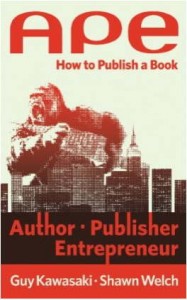 APE, Author, Publisher, Entrepreneur by Guy Kawasaki and Shawn Welch is an absolute must-read for anyone who wants to write a book and self-publish. It’s packed with information, advice, tips and resources.
Even if you still dream of finding the ideal agent and the most prestigious publisher on the planet, chances are that you will be ignored. So don’t waste your time: take your fate into your own hands and go for self-publishing. This book tells you how to make it right.
Is it easy? No…
Self-publishing is not easy — but certainly easier than waiting for miracles. Guy warns you: “I thought self-publishing would be easy: write in Microsoft Word, upload to Amazon, and cash checks.” Now, his book tells you what it actually takes, and what you need to do. It’s hard work, but you will make it if you are equipped. First, make sure that:
1) You want to become an author for the right reason — be of interest to real readers out in the wild (and not just to please yourself or your friends).
2) You understand that the self-publishing revolution is only starting: “only about 10% of publishing revenue comes from ebooks.” But that shouldn’t detract you, especially if you don’t stand a chance contributing to the 90% of the print books of the US publishing industry. Think of the opportunity: you are part of a new movement.
So start… Use the right tools. Read this book starting from page 1. Get Word. Create your template or leverage the work of others, such as Guy’s APE or Adam Shepherd’s Perfect Pages: Self Publishing with Microsoft Word. Don’t waste time doubting yourself and turn into a daring entrepreneur.
Is it possible? Yes. Start now!
Finance your book. You are not paid to write your book and it’s going to cost you some money. Not a fortune, but as in any business, check what you are ready to spend based on how many books you might be able to sell. Leverage existing organizations such as the Independent Book Publishers Association or crowdfund your efforts using Indiegogo, Unbound, Pubslush, or Kickstarter. Self-publishing is business with real upside potential. Yet, do not underestimate your costs and price your book accordingly — albeit reasonably.
Offer a clean product: Self-publishing requires a DIY mindset. This doesn’t mean that you will get away with an amateurish product: “Your goal is a book that looks and feels as good as any book from a big-time, traditional publisher […] The whole point of self-publishing is to produce a book faster, better, and cheaper than a traditional publisher.” So take the time to understand the authors’ recommendations, from “how to convert a file” to leveraging a new trend of “Author Services.”
Think “Distribution:” The self-publishing ecosystem is fragmented and messy. Just as any entrepreneur, analyze what it is about and choose your distribution channel (eBook resellers or direct) based on your goals. Take some time to learn from others. The simplest path is Kindle Direct Publishing, but also look into Apple, Barnes & Noble, Google, and Kobo; compare, and still consider selling directly to readers! Remember also that self-publishing doesn’t prevent you from using Print-on- Demand companies for printed versions. An important detail: Every format of a book needs a unique ISBN (although all ebook platforms count as one format).
Be smart: Throughout the book, Guy and Shawn give you the tools and advice you need successfully to self-publish your book. Look at them as your mentors. Listen to them. Do not overlook any chapter, even though you can read this book in whatever order you want. It’s part of your roadmap as an entrepreneur to keep your enthusiasm while remaining vigilant (and using common sense). In the end, success depends on you: market your book like crazy using any guerrilla tactics that come your way and build an enchanting brand: “the quality of your book and the quantity of your moxie are more important than the amount of money you’ve spent.”
Like Guy’s first book, The Macintosh Way, of which I had the privilege of being one of the very first readers, this book “celebrates passion, competition, excellence, and hard work. The basic premise is that David can defeat Goliath, that a teenager can fly into Red Square, and that an ex-jewelry schlepper from Hawaii can eat pate with a French philosopher at Jacques Cagna in Paris.” Become a self-published author the “Macintosh Way,” which entails “doing the right thing and doing things right,” and “competing on execution.” Become part of the APEcommunity: join the movement on Google+.
→ No CommentsTags:APE·Author·Entrepreneur·Guy Kawasaki·Publisher·Self-publishing·Shawn Welch·Writing a book
 One Million by One Million (1M/1M) celebrated it’s 150th free and online roundtable mentoring session for entrepreneurs a few days ago, and announced its 2013 New Year Challenge.
The Prize:
The New Year Challenge will award twelve scholarships worth $1,000 each to twelve entrepreneurs. This scholarship allows entrepreneurs to join the 1M/1M premium program that offers private roundtable sessions, a comprehensive curriculum, and introductions to potential customers, channel partners, media, analysts, and investors.
How to compete
Selection process
Twenty entrepreneurs will be selected to pitch their startup during the finals on January 10 and January 17, 2013 by audience voting.
Finals
The 20 Finalists will be notified by January 7, 2013, and instructed on preparing their presentations for the January 10 and 17 finals. The finals will be held during the 1M/1M roundtables, and you can register to attend here.
Twelve entrepreneurs will win the prizes! Go for it!
To know more about the program: One Million by One Million (1M/1M). I also wrote a post a while back about this amazing — and highly successful — initiative started by Sramana Mitra to democratize entrepreneurship education. Today, over 50,000 people participate in the 1M/1M community. Several revenue-generating companies have been incubated in the program, some have received angel and/or VC funding, and some have crossed the $1M mark. You can listen to some of them in the recording of the 150th roundtable on YouTube.
→ No CommentsTags:2013 New Year Challenge·Entrepreneurs·One Million by One Million (1M/1M)·Sramana Mitra
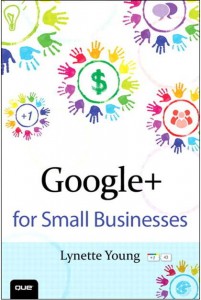 I met Lynette Young at Guy Kawasaki’s party at SXSW earlier this year. She contributed to one of the chapters of Guy’s landmark book, What the Plus!: Google+ for the Rest of Us. No wonder, Lynette represents the elite of “female googlers,” with over 1.5M followers.
Lynette just released an excellent short book. Google+ for Small Businesses. Her goal is to help you to realize that “Google + makes it easy for the small business owner with limited resources to be on an “even playing ground” with large corporations that have seemingly unlimited budgets.” Google + is more than a social media network: it’s the platform by the online search and advertising giant that owns the two most used search engines in the world, Google and YouTube. So visibility for your small company is at your fingertip.
Start with the end of the book: Your “One-Month Action Plan.”
Browse through Lynette’s “One-Month Action Plan” to realize that leveraging Google+ for your small business is not an insurmountable endeavor. “By taking 15– 30 minutes a day for one month, you can build a solid Google + presence and plan. At the end of one month, you will have circled 100 people and left comments on almost that many pieces of content. You can build a solid following and a library of content both available in Google + and via search on the Internet if you follow this plan. By focusing on a handful of tasks at a time and building on progress you’ve made the days before, you will come to the end of the Action Plan with a stronger understanding of Google + and the start of a community.” Now, read the book…
One hour or so of good reading
Lynette doesn’t drown you under tons of marketing hoops and loops, and instead walks you through the basics of Google+ in six chapters (plus the last one) that describe the platform’s main features, provide ideas to promote and support your business, increase your leads, enhance your support, or organize events with your customers and leads. One of the key characteristics to be aware of as a small business leader is to take into account major differences between your personal Google+ account and Google+ Pages for your organization. Using Pages, you cannot circle someone that has not circled you first and you cannot convert your Google+ Profile into a Page (but you can and should have both!). This anti-spam mechanism has its benefits. In turn, you won’t be spammed yourself and this forces you to develop a real attraction strategy and interact constructively with Googlers as a small business (instead of adopting a swarmy pitching style that exasperates everybody). Of course, hangouts and Hangout on Air can be initiated as a Page, which can be key for your marketing or lead generation initiatives. Take advantage of great tips scattered throughout the book, such as this one: “When you attach an image to a post, be sure the image has a descriptive name such as red-kids-sneakers.png rather than IMG0032002. Consider using part numbers or SKU numbers in the file name if that is a common way those products are searched and referenced. Google Search and Google Image Search can “read” the words in the name of the file and use them as keywords!”
Move into action…
On Google+, just as any social platform, you must be genuine, show that you care for others by sharing their content, and offer meaningful content of your own adapted to your various targets. For example, don’t bombard your VIP circle with tips that only matter to your current customers. With minimal, but consistent efforts, your Google+ Page will operate as an important amplifier for your small business. So keep in mind that a social platform basically follows the same etiquette as the physical world. If you are nasty, your nastiness will come across as even more ridiculous than it is. If you are great, your greatness, too, will be magnified.
→ No CommentsTags:Google+·Lynette Young·Small business·Social Media Marketing·What the Plus